By the time many children reach the age of two years old, they may already have five or six pieces of bulky, supportive equipment – each one essential for their comfort, development, and participation in family life. From standing frames and sleep systems to supportive seating and walking aids, this equipment plays an important role. However, for parents who must learn to understand, manage, and use all of it as part of a child's Posture and Activity Management program, it can be overwhelming.
The Challenge for Parents
During those early years, families are often prescribed multiple pieces of equipment, each with its own purpose, goals, and instructions for use. Suddenly, they are navigating a new world of disability and medical need. Parents have to remember what each device does and how to use it, all while carrying the heavy worry that not getting it right could affect their child's development and long-term outcomes. No pressure, as they say. Without a clear, integrated plan, equipment may end up being used inconsistently or even abandoned, limiting the benefits for the child.
The Challenge for Therapists
Equipment is frequently prescribed by multiple professionals in different settings – for example, at the child development clinic, hospital, or through the education authority. For the child's therapists, keeping track of it all; ensuring consistent communication; and guiding parents, school staff, and other professionals can be just as challenging, if not chaotic.
You might recommend that a specific standing frame be used "five times a week for 30 minutes to support lower limb alignment and improve participation in choir." But once this instruction leaves the therapy room, how do you ensure that the purpose, frequency, and goals are remembered – and easily understood by everyone involved?
A Simple, Visual Solution: The PAM Wheel
To make this easier, we've developed the Posture and Activity Management (PAM) wheel – a practical, visual, and easy-to-use tool that helps families and therapy teams manage a child's postureal and activity equipment.
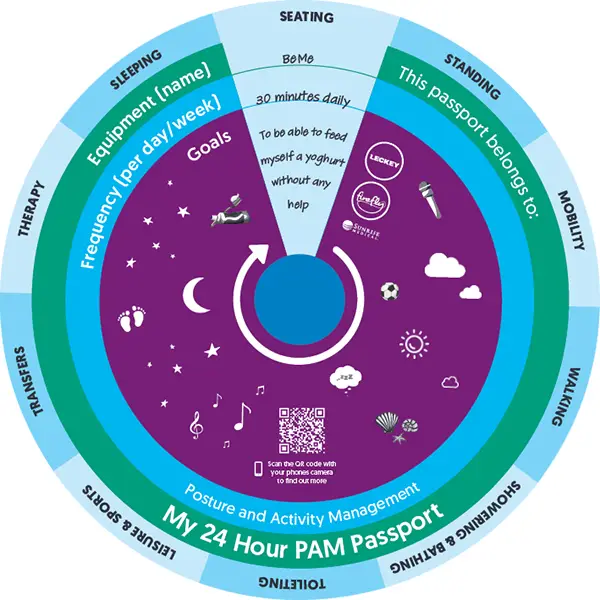
The rotating PAM Wheel will help you:
- Record all prescribed equipment in one place
- Note what it's for, how often it should be used, and what the goals are
- Add or update equipment as a child's needs change
- Improve communication across therapy teams, parents, and schools
- Gently introduce to families the expected equipment required in the future
The wheel includes all the key PAM categories, with space for equipment details and goals. It brings clarity and structure to what can otherwise feel like a disjointed and fragmented process.
Why It Matters
The PAM Wheel supports integrated thinking between clinicians, families, and schools. It can also be invaluable for the many other professionals involved in the life of children with additional needs, such as GPs, pediatricians, speech & language therapists, incontinence nurses, and orthopedic consultants, who all play a role and want to understand the child's full posture and activity management plan without reviewing pages of therapy notes. It provides clear guidance to everyone involved, what equipment has been prescribed, and how it should be used.
Download the PAM Wheel PDF